Trucker Kills Family With Semi in Raymondville Tx Crash Pictures
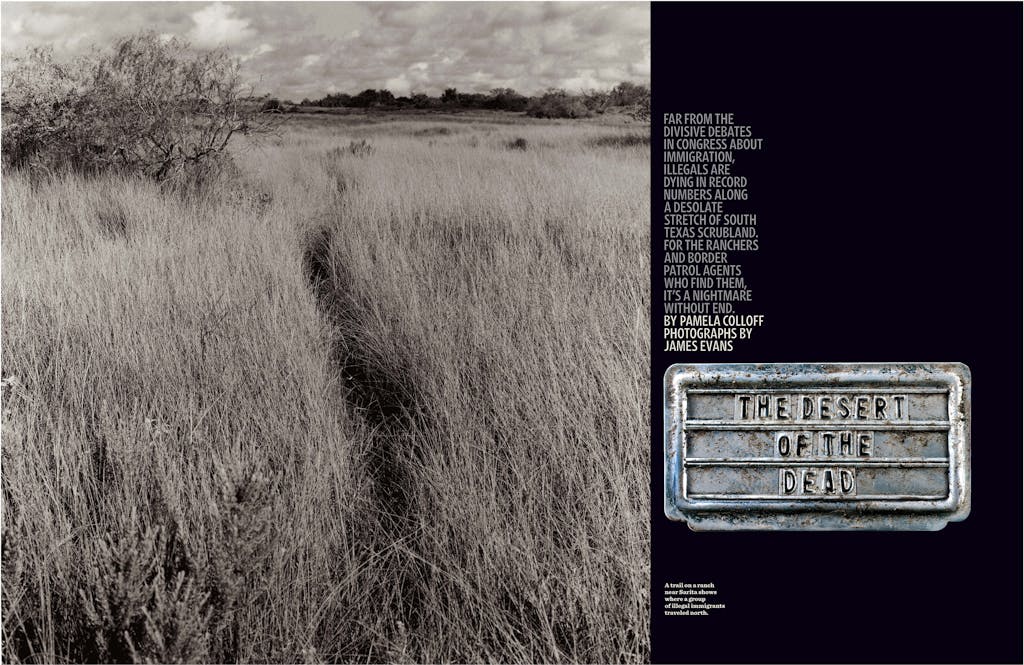
His name was Ezequiel Amaya Escobar, although no i knew who he was when his body was discovered one morning last August nether a mesquite tree. He was lying five and a half miles from the nearest paved road, in a stretch of South Texas scrubland that Spanish explorers once called El Desierto de los Muertos, or the Desert of the Dead. The ascetic mural, which extends from Kingsville to Raymondville, is a patchwork of ranches that includes two of the largest in the state: the King Ranch, to the northward, and the Kenedy Ranch, to the southward. A Edge Patrol checkpoint stands roughly in the middle, on U.Due south. 77, and Ezequiel had died trying to walk effectually it. When he was plant, his caput was resting on his backpack, as if he had stopped in the wilderness to take a nap. He almost looked alive; he had thick blackness hair that fell simply beneath his ears, and his face was soft and round. But his lips were croaky, his optics broad open. He was thirteen years former.
What piffling is known virtually Ezequiel sits in a white banker's box in a storage room of the Kenedy Canton courthouse, in Sarita, wedged betwixt the more than than 1 hundred case files of other undocumented immigrants who accept died about the checkpoint trying to make their way north. His death never made the paper. According to a typewritten report from the sheriff'southward department, he had been classified, at first, equally a "John Doe" until he was identified by his mother, whose phone number he had written, in enduring ink, on the label within his T-shirt. He had come all the way from Honduras. His friend, 15-year-old Jesús Edgardo Marcia Abrego, had told investigators that Ezequiel had lagged backside the group they were traveling with as they trekked through the brush. After more than a day on human foot, he started to show signs of estrus exhaustion. He began to vomit as he struggled to keep up, and as the hours wore on, he had convulsions. That evening, he dropped to the ground and stopped breathing. "Jesús said he gave him mouth-to-mouth, but he did non reply," the report states. "He wasn't able to feel a pulse and saw that his optics had rolled up into his head and he knew that [Ezequiel] was dead."
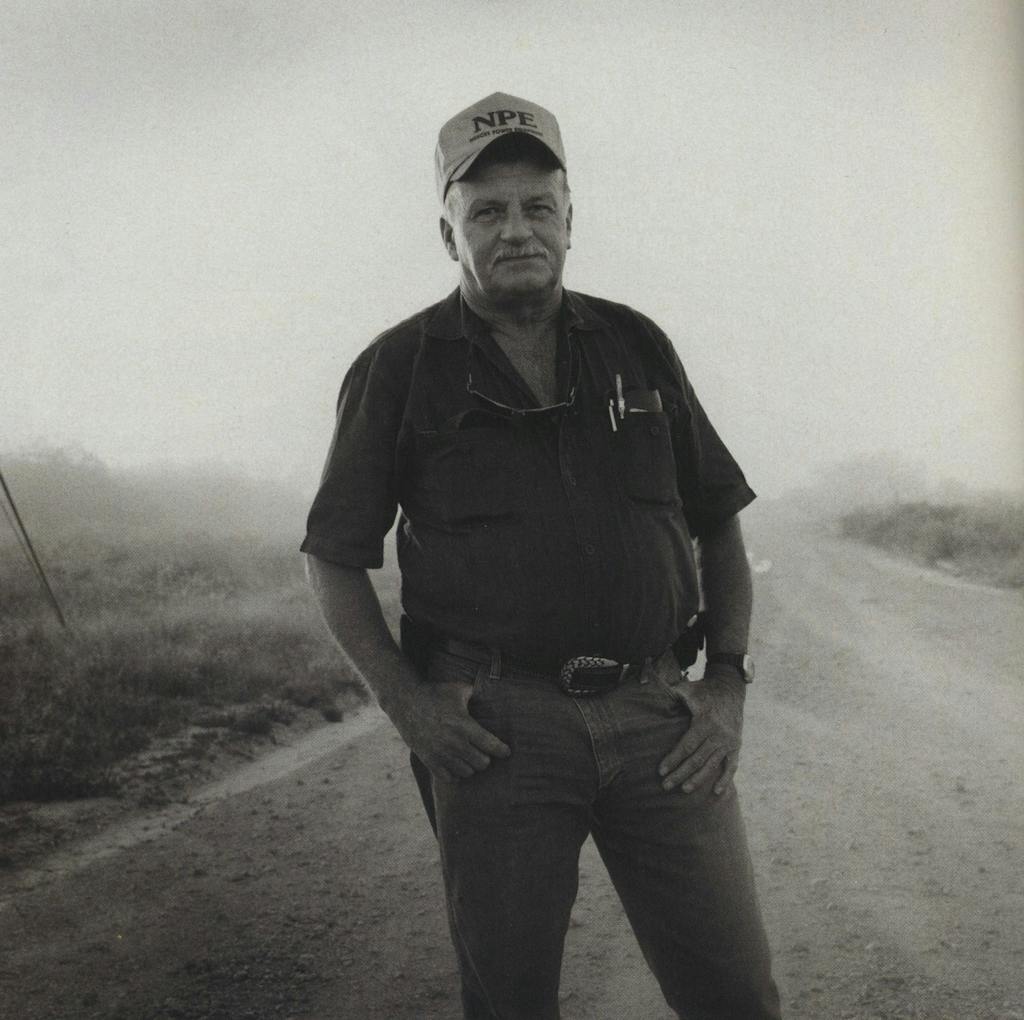
Donald Strubhart was the man who had found him. In late June I went to run into Strubhart at the ranch he manages, Cielo de Cazadores de Codorniz. The property, which shares a contend line with the King Ranch, sprawls across 125 square miles of sand dunes and catclaw and scrub brush. Strubhart, who is 58, gave me a warm handshake and suggested that nosotros talk while he fabricated his rounds. The air was hot and dry out and still that morn, and as Strubhart eased his pickup out of the driveway and began to caput south, we passed some Longhorns napping in the shade. His quick blue eyes were shaded from the glare by a ball cap from a local farm-equipment company, and his salt-and-pepper hair poked out from under it. As he collection, he began to talk about the staggering number of people who had passed through the holding in the spring. "From Easter until the offset of June, it seemed like there was an exodus out of United mexican states," he said. "In that location were days in May when all I did was call Clearing. We spent nigh of our time repairing fences that had been tore upwardly, and then more people would come through. Seemed like information technology would never terminate."
A doe froze in her tracks, startled by the rumbling of his diesel engine. Strubhart continued on, and after a while, he rounded a bend and pulled the truck over to the side of the caliche road. He walked a few paces so stopped at a mesquite tree. "This is where I found him," he said, and fell silent. He used the edge of his boot to nudge an empty, rusted tin of Sterno that lay on the ground. Sunlight filtered through the branches above him. "I've worked on this ranch for ten years, and in that time, I've establish 5 people dead," he said. "This one hitting me harder than all the others. I spent a piffling over a year in Vietnam, and this boy carried me back. American boys died over there for no reason, and information technology made me sick. And that's what I feel about this boy—he died for no reason. Eventually I'll get over what I saw in Vietnam, merely I don't know if I can go over this kind of thing."
He looked out over the ranch, which a lack of rain had turned dry out and brown. "A child died out here, under this tree," Strubhart said. "I don't have the answer to what we should do nearly people coming over the border. All I know is no i should have to dice this way."
Ninety MILES Northward OF THE RIO GRANDE, the Sarita checkpoint is the last threshold that undocumented immigrants must cross after leaving Brownsville behind. Some manage to slip through, hidden in the traffic headed n—squeezed within unventilated tractor trailers, crates of watermelons, piñatas, suitcases, car trunks. But near pay a coyote, a smuggler, to guide them effectually the checkpoint, walking for every bit many as four or five days through the desert. They bypass the town of Sarita, a small, dusty, unincorporated customs on the Missouri Pacific railroad line where a solitary yellowish traffic calorie-free blinks over the highway. Just 417 people alive in Kenedy County, and it is possible to drive through Sarita, its simply town, without seeing a soul. In that location are no cafes, no gas stations, no convenience stores. Judging from my first pass through town, Sarita seemed to exist inhabited past two little boys on bicycles, who circled the courthouse, and a stray dog.
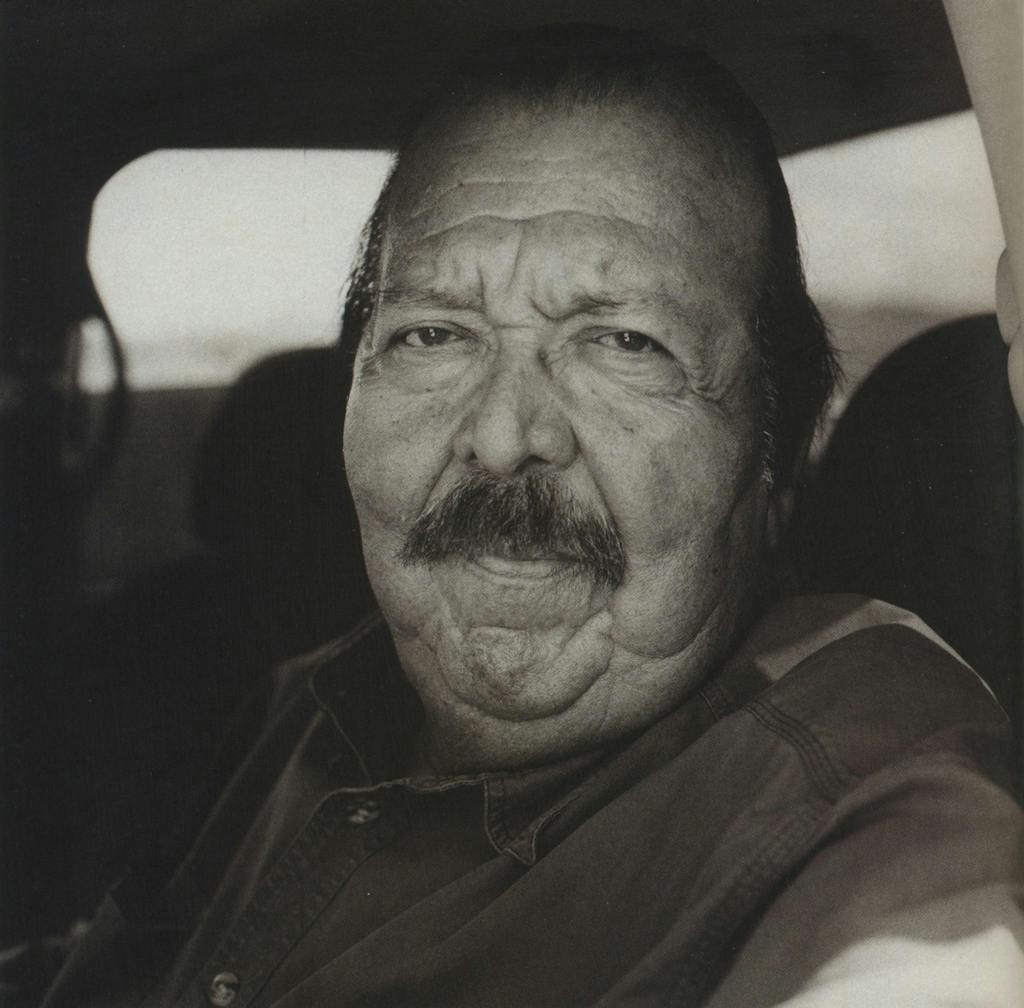
To the east, behind a series of locked gates on the Kenedy Ranch, is a cemetery where immigrants who have died while crossing this country are cached. I asked Rafael Cuellar Jr., the quondam Kenedy County sheriff, if he would take me at that place i afternoon in July. Cuellar, who stands half dozen feet three, is known around town as Junior, and he has a hangdog face and a gentle, kindly manner. At 68, he is hard of hearing and his legs are crippled by diabetes; he shuffled out of the courthouse to meet me with the help of a cane. He had joined the sheriff's department in 1978 and served as sheriff from 1990 to 2000, when this area became one of the deadliest passages for undocumented immigrants in the nation. "I think I found 60 dead, and I think I saved about the same," Cuellar told me as we turned past a gate on the Kenedy Ranch, down a sandy, unpaved route that threaded through the common salt grass. "The nineties is when they started dying on me. Before then, they used routes around the checkpoint that were closer to Highway 77. The more than immigration officers who came downwards here, the further from the highway they went. And the farther you get from the highway, the more dangerous it becomes."
Every bit sheriff of the fourth-least-populated county in the nation, Cuellar had coaxed stray cattle off the road and investigated oil field theft, but almost all his work, in i mode or another, involved undocumented immigrants. He and his deputies had to recover the expressionless. Bodies turned upwardly all over the canton, found past ranch hands, Border Patrol agents, hunting guides, and oil field workers. Some had been deceased for a few hours; others were only bones. There was the twelve-yr-former boy whom Cuellar was never able to identify. The woman from Peru who died but a quarter mile from the highway. The human being who was so overcome past the heat that he tore his clothes off before he died. Regardless of the season, the dead kept coming. "In the summer the sand is at least a hundred degrees, and they would walk in information technology until they couldn't stand upward anymore," he said. "In the winter they would die from the common cold. And when the temperature was normal, they would go hit by the train. They would slumber in between the tracks considering they idea it would protect them from snakes. They would use the rail as their pillow, and nosotros would have to selection up the pieces."
Cuellar's great-grandfather had come from Mexico in the late nineteenth century. His granddad was a ranch hand on the Kenedy Ranch until he was eighty, and his father was a foreman at that place for 50 years. Cuellar, who had worked security on the ranch, used his familiarity with the land to help observe the missing. "We would get anonymous calls from Corpus or Houston that someone in a group had been left behind," he said. "They would give very full general information, like, 'She was by a windmill, two hours from the checkpoint.' We had to wait with bad information, just sometimes we got to them when at that place was still a chance to relieve them. Sometimes we couldn't, and nosotros'd find a skull 3 months later." The dead were often bundled as reverential even so lifes past a sibling or a friend who was with them at the end. Easily were folded across chests. Voter registration cards were laid out abreast them. Crosses made from tree branches stood above them. Holy cards rested on their chests, the Virgin of Guadalupe clasping her hands in prayer over them. One adult female dug her own sis's grave, using a plastic jug she had cutting in half and her bare hands.
"I used to inquire people why they would risk and then much to come here," Cuellar told me, as he turned down another sandy road, a long way from where nosotros had started. "I man told me that his family was dying of hunger over there, and he could make enough money for food over here." He handed me a gear up of old keys to unlock the last ranch gate. I swung it open, and he drove through. Nosotros were shut to Baffin Bay, and thunderheads hung in the heaven over it, to the eastward. The salt air was thick and humid. Cuellar steered his pickup past an erstwhile wire fence, into the cowboy cemetery where many of the Kenedy Ranch's vaqueros and ranch hands take been laid to rest. It was a wild, shaggy place overgrown with sunflowers and grape vines. "My grandad is buried over in that location," Cuellar said, gesturing toward the section to the west where the old tombstones stood. "And over at that place," he said, motioning to the east, "is where we bury the immigrants that can't be identified or whose families never come up for them."
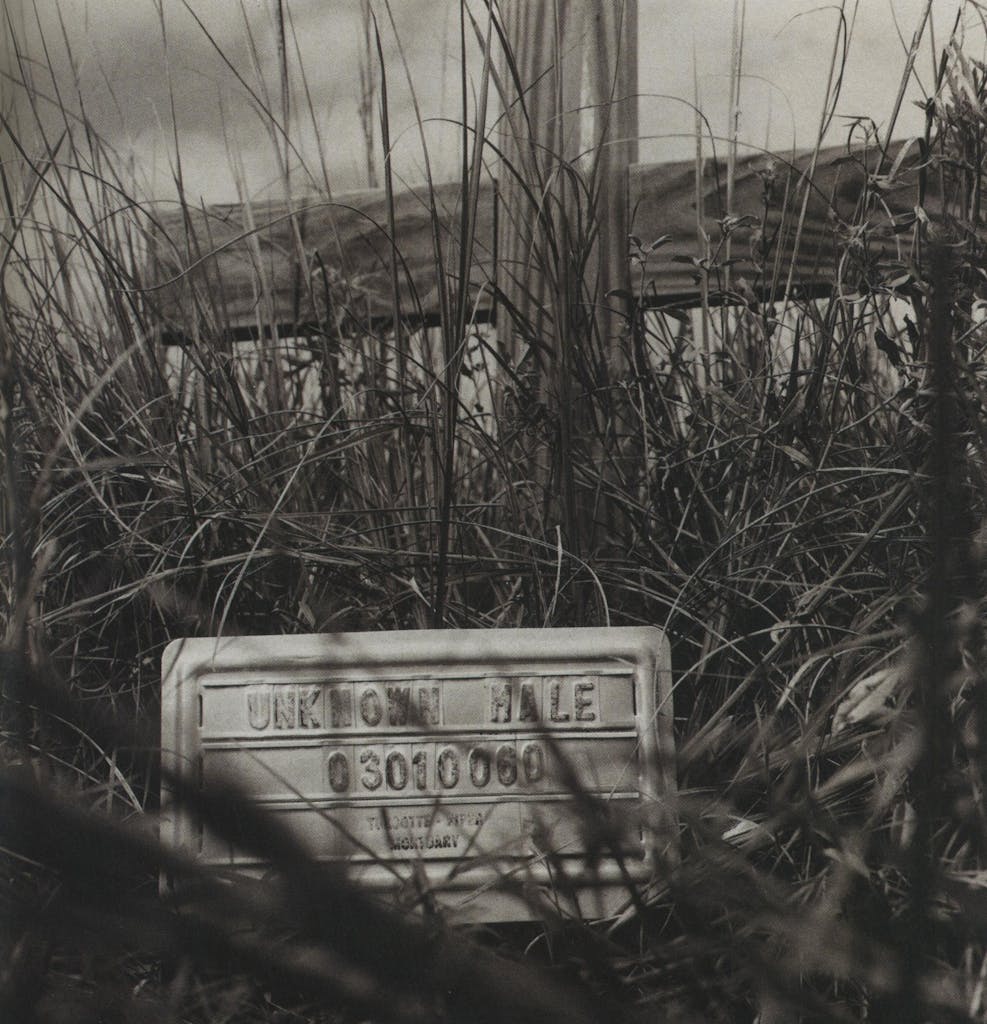
Thirty-four plain pine crosses stood on the east side of the cemetery. Aluminum markers, driven into the dirt in forepart of them, offered whatsoever meager data at that place was: "Unknown skeletal remains." "John Doe." "Unknown Male person." "Female Unknown." The common salt grass had grown high around the markers, and I had to kneel downward and push back the undergrowth to read them. Cuellar stayed behind in his pickup, staring out at the paupers' graves. As sheriff, he had fabricated certain that the immigrants who were laid to rest here had received a proper burial, with a priest, if he could observe one. The pallbearers were ordinarily himself, his chief deputy, the mortician, and his assistant. "See the space right hither, between the crosses?" he asked when I got back into the truck, pointing to a gap in one row. "We exhumed the body of a seventeen-year-erstwhile boy later we tracked downward his family through the Mexican consulate. Eighteen or xx years agone, he had run east from the checkpoint at night, and he got lost. I found his trunk a week later. He had fallen back on his legs, kneeling, and he died like that."
Cuellar turned in his seat to look at the newest cross, beneath which grass had just started to grow. A long, empty space for futurity graves ran southward of it to the cemetery fence. "There are going to exist more crosses there by the finish of the yr," Cuellar said. "That row is going to fill up, and we'll have to commencement another. And at that place'due south no way we can stop it, every bit long equally they have aught to swallow over there." He shook his caput every bit he looked out at the pino crosses, and and then the heaven beyond it, which was growing dark. He turned the fundamental in the ignition. "We should go," he said. "The pelting is coming."
"LOOKS LIKE A LOT OF TRAFFIC went through here last nighttime," Strubhart told me one morn as he studied a patch of world on the due north side of Cielo de Cazadores de Codorniz. "I'd say it was a group of about twenty-five people. Encounter the grass, how it'due south flattened?" He was stooped over, inspecting an area past the side of the route that had caught his attention. The tall prairie grass lay at an angle, some of it flush with the basis. The trail continued on for a altitude, as if a group of people had trampled through it single file.
"They funneled through here," Strubhart said equally we started to follow the path. "They must have been walking afterward the rain, and it rained yesterday at noon. See the dirt from their shoes? Encounter how it sticks to each bract of grass? If they had passed through here before the rain, information technology would have done the dirt off. They probably crossed tardily last night or early this morning." Nosotros continued on until nosotros had reached a mesquite thicket. "When they walk through this part of the ranch, they're following the gas pipeline, over at that place," he said. "It runs north from McAllen all the style to Chicago. It's on all the coyotes' maps." He ducked nether mesquite branches and followed the trail. "I'm guessing they took this little detour because they got spooked by something, or they were trying to avoid the sensors," he said. "You know Clearing puts sensors in the footing so they can tell where illegals are walking?" He bent over to examine a lord's day-bleached jawbone with two prominent, pointy lesser teeth—"Javelina," he announced—then resumed his search, his eyes trained on the ground. "Looks similar one person walked out here and checked that everything was articulate, and the balance followed him back to the pipeline," he said.
We continued the conversation back in his truck, and as we talked, he made his style through the property, eyeing the contend line to run into where it needed fixing, stopping at each windmill to make certain that the trough beside it held plenty of water. Every now and and so he spotted something that needed his attending, and he hopped out to tinker with a feeder or adjust a water pump. "The ranch is 8 miles across, and there is a trail every mile or and then," he said. "The coyotes use unlike paths; it just depends where Immigration is putting pressure on them. When a grouping has to cantankerous a caliche route, the last person wipes his footprints out with a co-operative. So I await to encounter if in that location are brush marks on the road." He knew the terrain well plenty that he could tell where they had been, not only past the plastic bags and water jugs and cast-off apparel they left behind merely as well past the mode they contradistinct the mural. "I could tell y'all if someone had broken a limb off that tree, only similar you'd discover if you came home and someone had moved a piece of furniture in your living room," he said.
As Strubhart drove, he would stop occasionally to lift his binoculars; squinting into them, he would autumn silent, studying the wildlife from a distance—a white-tailed buck, a flock of wild turkeys, a nilgai antelope. Cielo de Cazadores de Codorniz, which ways "Quail Hunter'due south Sky," is the private hunting preserve of a retired banking executive, and information technology falls to Strubhart and his ranch easily to continue its wild animals flourishing until deer season. Just as Strubhart keeps track of how many does are dropping fawns, so he notes the progress of immigrants through the ranch; equally we talked, he stopped to option up a blueish oxford shirt that lay, incongruously, in the eye of the wilderness. "The largest group we e'er had come up through hither was fifty-4 people," he said. "Usually it's groups of twenty people, or five or six. Virtually groups have kids in them. We run into a lot of significant women who want to requite birth on this side of the river. I've seen mothers carrying infants that still had their umbilical cords." Strubhart sighed and studied the road ahead. "Concluding calendar week, I came across a grouping of twenty-two kids who were walking with a guide, and I called Clearing," he said. "Not a i of them was older than fifteen."
Grit kicked up behind Strubhart'south truck as we headed deeper into the ranch. "The coyotes accept GPS systems, night-vision goggles, cell phones, hand-drawn maps," he continued. "They're professionals. They have scouts they ship through this country. They lookout man when Immigration goes upward and down the highway, and they know when the shift changes happen." The mechanics of man trafficking, he explained, were as clever as they were mercenary, with a skilled coyote charging each undocumented immigrant anywhere from $i,200 to $1,500. Each coyote has a crew, he explained, and each crew has a driver who drops the group off in the brush somewhere south of the checkpoint. "Yous can meet them at sunset—a whole carful of people bailing out into the castor," he said. "Sometimes they leave the bail-out cars by the side of the road with the doors hanging open." Another fellow member of the coiffure takes them into the brush, Strubhart said, and guides them past the checkpoint to a predetermined spot. So a driver picks them up by the side of the route and takes them to stash houses in cities farther north.
"The coyotes know how hard the trip is, but they pigment a pretty moving picture for these people," Strubhart said. "You tin can tell by what they're carrying that they have no idea what they're getting into. They'll bring a toothbrush and toothpaste but no antibiotics, no lather, no make clean clothes, nothing they can physician themselves with. They vesture inexpensive tennis shoes that fall apart. By the time we find them, they're crawling with ticks. They've run out of h2o, so they're drinking from the troughs. They're carrying plastic jugs that are full of brownish water." Strubhart lit a cigarette and cracked his window open up, slowly exhaling into the hot air outside. He looked tired in the morning light. "When I went to Vietnam, I saw real poverty," he said. "About people have no idea what information technology means to live in a place with no education, no opportunity. The Vietnamese had nowhere to go. Mexicans have somewhere to go, so they come hither instead of making their ain state amend. And as long as they can detect jobs here, they'll keep coming. I'1000 not for or against them. It's just hard seeing how much some of these people endure."
To bear witness how tough the journeying is, Strubhart took me to a well-traveled area about a deer blind, a sandy slope studded with prickly pear and huisache, a few miles from the highway. "Endeavour walking that little loma, but so you can see what it's like," Strubhart suggested, and I did. The sand was as loose and fine as saccharide, and it shifted nether my boots. Each footstep required effort, and afterward a few minutes, my legs started to anguish. The air was thick and humid, and the oestrus was unbearable. "Imagine doing that for a couple of days with a twenty-pound sack on your dorsum," Strubhart said when I returned, short of jiff. "They'll make it this sand and it volition spill into their shoes. Pretty before long they've got some unbelievable blisters. And so their anxiety get and so swollen that they can't become their shoes back on. We find people out hither, barefoot. When they can't walk anymore, the grouping leaves them backside."
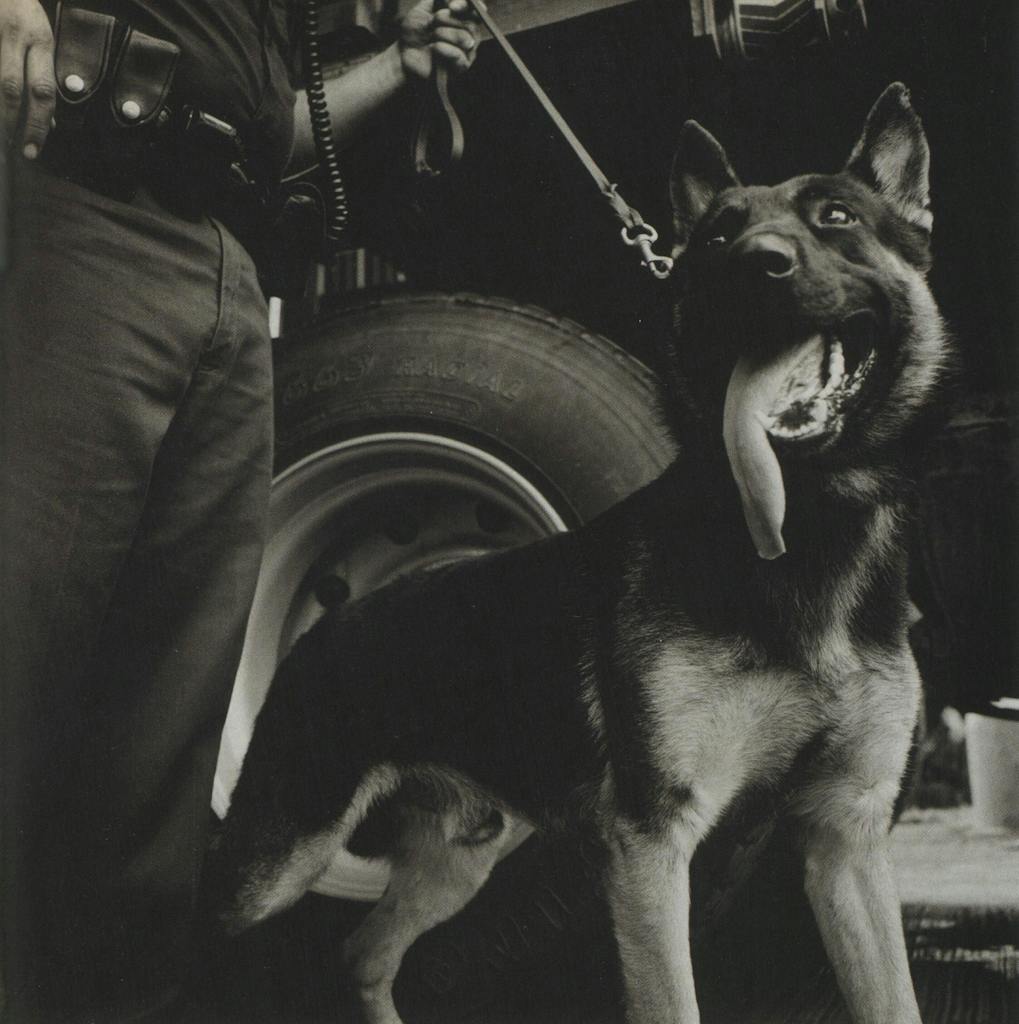
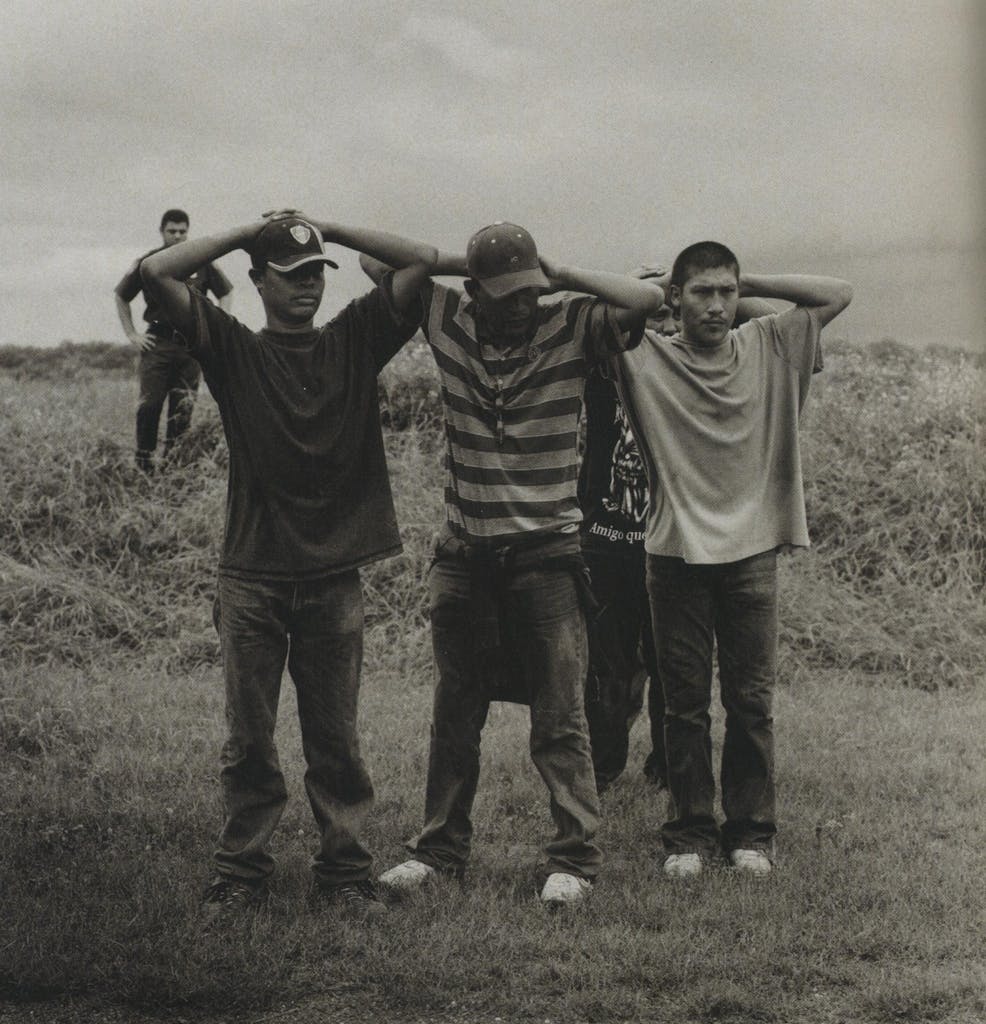
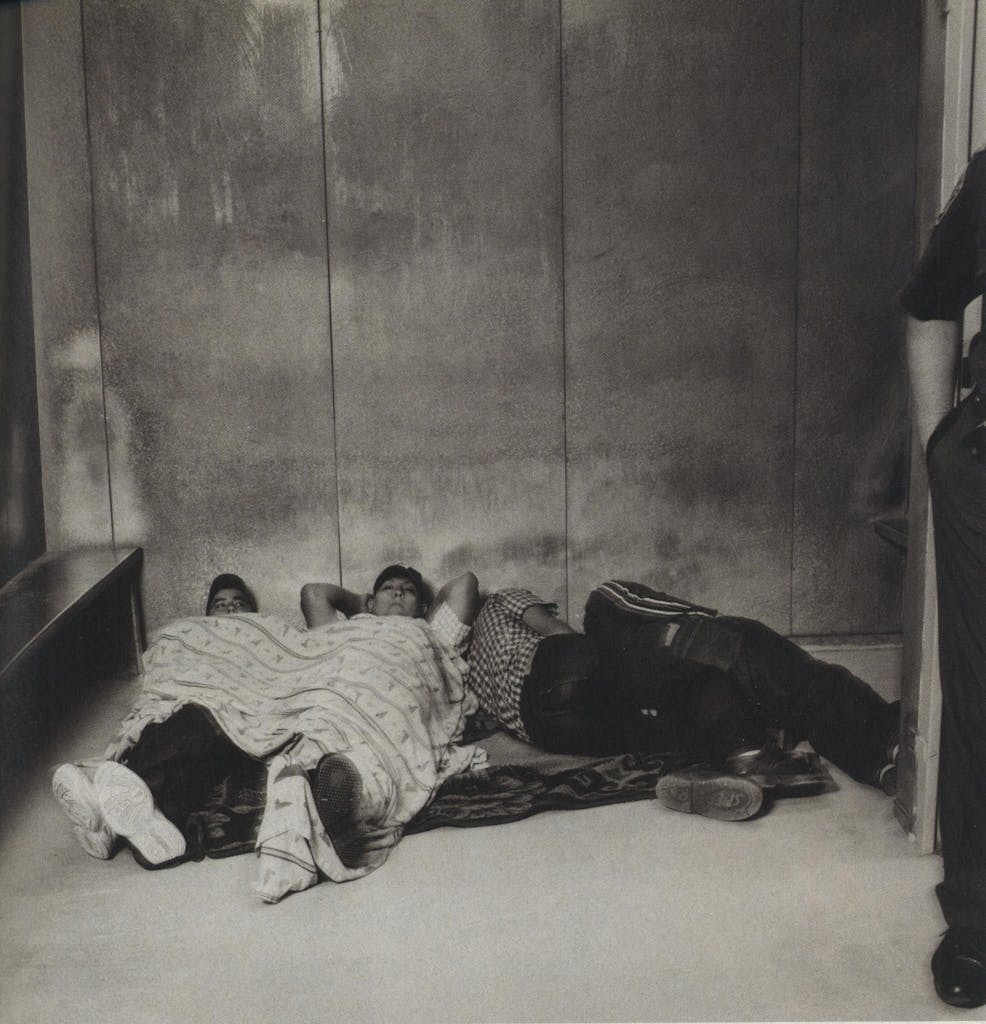
THE CHECKPOINT SOUTH OF SARITA, which I visited 1 morning in July, hardly looked similar the kind of identify that so much human drama revolves around. The traffic cease, demarcated by orange pylons, sits side by side to a brightly lit Border Patrol office, where three Mexican nationals waited for their paperwork to exist processed. A line of cars trickled by. I watched as a succession of drivers—oil field workers, truckers, green carte holders, college students returning from South Padre Isle—was waved through, answering the question "Are you a U.S. citizen?" as a dog trained to sniff out contraband circled their vehicle. A few were pulled over for more-rigorous inspections, but it was a slow morning, and they yielded goose egg. Most of what happens here takes place not at the checkpoint simply around information technology, on the ranchland that extends beyond the highway. The Edge Patrol deploys many of its agents out in the castor, where they track the movements of groups of undocumented immigrants using night-vision goggles, infrared scopes, and sensors and past "cutting sign," or reading the footing for tracks. On busy days, agents apprehend hundreds of "brush walkers," whom they bring to the checkpoint and question. More and more than, though, it is the checkpoint 22 miles to the w, in Falfurrias, that is recording the greater number of undocumented immigrants. "If you lot want to meet what'south really going on, go to Fal," ane Border Patrol amanuensis advised.
At that place are only two major highways out of the Rio Grande Valley: U.S. 77, which runs north through Sarita, and U.S. 281, which runs northward through Falfurrias. For the past few years, the Border Patrol has concentrated on slowing illegal crossings in Brownsville, and coyotes, in turn, accept turned their attention west, ferrying more than undocumented immigrants out of McAllen on 281. To become around the checkpoint, they have taken increasingly remote routes, and though apprehensions in the region accept dropped, the number of deaths has soared. In the Border Patrol sector that includes Sarita and Falfurrias, 30 undocumented immigrants died crossing in 2002. In 2006 that number had shot up to 81. (The Edge Patrol tracks fatalities by fiscal twelvemonth, which runs from Oct to September.) This year solitary there were 245 rescues, nearly double what there were in 2004. "There's a lot more at stake now," Agent J. J. Garcia told me at the Falfurrias checkpoint. "As the Edge Patrol gets bigger, information technology becomes harder to cross the edge. Nosotros have more cameras, more agents, more sensors in the ground. We've got the National Guard assisting us. By the time people become this far north, they have invested a lot of fourth dimension and money in getting where they're going. If they're from El salvador or Republic of honduras, they may accept been traveling for months. They're going to exercise whatever it takes to get effectually the checkpoint."
The Border Patrol has been then overwhelmed by the number of undocumented immigrants in medical distress that it has stationed its own search-and-rescue team in Falfurrias. "Nosotros're trying to save lives, whether we're apprehending people in the brush or treating them," said Amanuensis Alejandro Garcia, when I asked him whether his job equally a medic worked at cross-purposes with the Edge Patrol's mission. "Yous don't think about whether they're illegal when they're hurt; they're human being beings." I was tagging forth with Garcia and two of his colleagues, Isaac David and Jose Puebla, as they patrolled U.Due south. 281. Just over an hr passed before a phone call came beyond the radio about a rollover blow in a secluded stretch of ranchland 20 miles northwest of the checkpoint, on Texas Highway 339. The dispatcher reported that at that place were at least eight people in the Suburban and that two were believed to be dead. "Nosotros're seeing more of these kinds of accidents," David shouted over the roar of the Humvee as he steered united states, at top speed, toward the scene. "It's unremarkably an older vehicle, and the shocks are worn. A smuggler is picking up a group that has walked through the brush, or dropping i off, and they're in a blitz to get out of at that place, so they're driving also fast. No i is buckled in. When you hear numbers similar that—eight adults in a Suburban, this far out—you can be pretty certain we're talking about a group that is being smuggled."
When we arrived at the scene, on the heels of a local EMS unit and the sheriff's section, the blow was even worse than the dispatcher's written report had let on: Fourteen passengers had been riding in the Suburban, and all of them had been thrown. People lay in the grass on either side of the two-lane highway. Blankets had already been draped across the faces of the three who were expressionless. The Suburban was beached on its side, next to a frayed tire that had split up open up. Strewn beyond the pavement were empty water bottles and cans of Red Bull, sneakers and soiled clothes. One human being sat in a daze equally blood seeped from his brow. The only sound was that of a woman moaning as EMTs struggled to stabilize her. David and Puebla ran to aid another young woman, whose legs were aptitude at odd angles; her right shin bone protruded from her pare, and her eyes were squeezed shut, equally if she were concentrating on the hurting. "¡Mis piernas!" ("My legs!") she screamed when David wiggled her toes. The medics administered oxygen and an Iv and tried to keep her calm. Her hair was muddy and disordered; she hadn't bathed in a long time. When David asked her when she had terminal eaten, she whispered that it had been three days.
A justice of the peace, an older man in a white harbinger lid, pulled on latex gloves and began to itemize the dead. A DPS investigator took photos. The injured were loaded into ambulances, including the woman David and Puebla were working on. Her lungs had begun to fill with fluid, and her claret pressure had dropped precipitously low. "I need to get her to a hospital, quick," an ambulance driver said before peeling off. The injured woman, like several others in the group, had come from El salvador. "These people had been walking for a long time," said Alejandro Garcia, as nosotros watched the ambulance race down the highway. "They did it the hard fashion. They walked all the way out hither so we wouldn't detect them. They had made it. Information technology all came down to a blown tire."
EXCEPT FOR A TOUR OF VIETNAM that began in 1968, Donald Strubhart has never lived further than the neighboring county, where he grew upwards on a dairy farm outside the town of Riviera. He was the oldest of thirteen kids, and Spanish was spoken ofttimes enough at dwelling that he was the but Anglo placed in a remedial English class when he started elementary school. "I was twelve or thirteen before I saw an clearing officer," he said. "In the fifties there were possibly ii or three of them in all of Kleberg and Kenedy counties. There were more game wardens back then. Mexican nationals would come to our business firm tired and hungry. They would piece of work for the states for five or six days, and nosotros would feed them and requite them a place to stay. The women would wash clothes and assistance around the house. The men repaired water lines and fence lines; they would feed and milk the cows. They slept in the barn because that was all nosotros had. In one case they were fed and rested and back on their feet, they went north to make more money."
Strubhart was drafted when he was nineteen, and he served equally an Army Ranger with armed services intelligence, tracking the Vietcong through the jungle on long-range reconnaissance patrols. "Xviii of us went, and three of us came back," he said. He had been captured after being knocked out by a concussion grenade and was tortured until he was rescued, three days later, by his young man Rangers. He returned dwelling with seven Imperial Hearts and no task prospects. He married Dee Deanda, a pretty brunette from the Southward Texas town of Agua Dulce who was a waitress at a local cafe, and afterwards he had worked construction and cowboyed for a while, he started his own abode-repair business. Strubhart loved to chase and piece of work outdoors, and the solitude of living on a ranch appealed to him. After he grew his repair concern into a successful construction visitor, he left it backside to manage Cielo de Cazadores de Codorniz. He congenital the ranch business firm himself, out of cedar, and he and Dee moved to a more than modest business firm next door.
At the fourth dimension, Border Patrol initiatives in El Paso and San Diego were having some success, and traffic was shifting to more-desolate crossing points, which led due north through places similar Kenedy Canton. Strubhart was stranded in the middle, left to find the ill and the lost who stumbled out of the castor. The ones who were in the worst shape made their mode to the firm. "Dee and I came back from town a few years ago, and a thirteen-year-old girl—she didn't counterbalance 70 pounds soaking wet—was lying in our driveway, adjacent to the dogs," Strubhart said. "She'd been lost out here for three days and iii nights. She was scared to expiry; she couldn't hardly breathe. She'd been drinking dirty water out of the troughs, and her clothes were torn and filthy. She was from El salvador, and she was trying to get to her brothers who lived in N Carolina. Her daddy had sold some cattle so she could cross. Information technology was raining, and she was shivering when we institute her. We sat her downwardly on the porch, and Dee put the daughter's head in her lap and tried to calm her down."
Strubhart calls the Border Patrol whenever he sees undocumented immigrants passing through the ranch, and he is grateful for the assistance, just he is unsure what effect they accept on the number of people crossing through the holding. "When we go quail hunting, we accept pointers—the best hunting dogs in the world—and they don't observe but 20 percent of the coveys," he said. "And nosotros know where the coveys are. Immigration has told me that they remember they catch about 10 per centum of people coming through hither."
Dee keeps extra rosaries on hand to give to the occasional strangers who wander up her driveway and then they can take a source of comfort when they are taken to the checkpoint. She shows them what kindness she tin can. "Last October an illegal was limping forth the fence line," she told me. "He was an older human from Mexico, I'd say in his mid-fifties. He was tired and his shoes were falling apart. He asked if it was okay if he could sit down under that tree, in the shade. I stock-still the homo some sandwiches and tea. I gave him a pair of socks and an onetime pair of sneakers my son outgrew. Was that illegal? Should I not accept helped him? A grown homo had asked me for permission to sit in the shade. These things stay with you."
What stays with Strubhart are the things that Dee never saw—the teenager who was 8 months significant who lay in the dirt, abandoned by the group she had been traveling with. The woman he found cowering in the grass with an baby. The bodies he kept discovering. "I institute an older man who died from a rattlesnake bite," he said, when I asked him about the others, also Ezequiel Amaya Escobar, he had come up across. "There was a 19-twelvemonth-onetime boy who had been dead for iii days, who died from dehydration; I was by myself when I saw buzzards on him. I found another boy, who tried to cantankerous the lake and drowned. He was floating on the shore. 6 years ago I found a man skull. Information technology wouldn't surprise me if we found simply half the people who've died out here. I've looked with Clearing for three bodies that illegals have told united states about—people they say died out here—who nosotros never constitute."
IN SARITA I HEARD ABOUT Deyanira Gallegos Tapia, a 24-year-old undocumented immigrant who had lost her legs in a railroad train accident near the ranch. A Univision reporter in McAllen named Victor Hugo Castillo had taken an interest in her case, and he put me in touch with her husband, who had made the journey with her and who was living in the Valley.
Alejandro Sedano Gutiérrez met me one afternoon in Weslaco, neatly dressed in a button-down shirt and slacks, his jet-black pilus combed smooth confronting his forehead. Deyanira had gone to United mexican states with her mother for an extended visit to see her family, he explained, but in her absence, he agreed to tell me her story. Deyanira had come from the hamlet of Chignahuapan, near the industrial city of Puebla, Alejandro said, where she had supported herself and her six-twelvemonth-old son by making Christmas ornaments for $18 a week. Her father, who was a constabulary commander, had been murdered when she was a teenager. Alejandro and Deyanira had started dating when he came to Puebla to see relatives; he was already living in the U.South., washing dishes in a restaurant in Missouri. Deyanira'south one-half-brother, Andrés, had gone n as well and was living in Houston. Both men had slipped across the border years before without any problems. Andrés was visiting family in Puebla last spring, and when he and Alejandro were ready to head dorsum to the U.South., Deyanira decided to join them. She asked her mother to await after her son, promising to come up back for him once she had gotten settled up north.
On April 13, 2005, Alejandro said, they all took a passenger vehicle to Reynosa. They paid a coyote $350 to drive them to the river and guide them across, paddling on a raft to the reverse banking concern when the coyote'south lookouts on the Texas side said it was safe. From in that location, they were loaded into a station wagon and driven to a motel in McAllen, where they waited for four nights. A coyote said she would take them to Houston for $1,500 apiece, and Alejandro helped pay Deyanira's way with coin he had saved washing dishes. "The coyote said she would drop united states of america south of the Sarita checkpoint," Alejandro told me in Spanish. "She told us we would walk around the checkpoint for iv hours and so go picked upwardly. Andrés never told us this was a different coyote than the 1 he had used earlier." They were driven upwardly U.Southward. 77 and allow out along a dirt road past some railroad tracks. The coyote came with them. "She walked with us for about four hours," he said. "She pointed at some lights and said that was the checkpoint. She said she would pick us up once we had walked around it, and she left at most two a.m." By dawn, they knew they had been tricked; the lights were distant radio towers. "Andrés said, 'The checkpoint shouldn't be much farther,'" Alejandro explained. "He said, 'Let's keep walking.'"
Then they walked. "Five nights we were out there," Alejandro said. "We would walk at night and slumber during the day. When nosotros saw Immigration, we would hide nether mesquite trees. We ran out of water the second day. Food was gone by the tertiary. I had a map, only I couldn't figure out where we were." Only afterwards did he understand that they had been dropped off in Raymondville, a full l miles due south of Sarita—not the four-hour trip they had been promised. "Nosotros started drinking from the troughs," Alejandro said. "The h2o had algae on information technology, but we were thirsty. At nighttime, yous could hear the coyotes howling." They prayed for food, and on the fourth day, as if by divine intervention, they institute two cans of beans, two cans of corn, and a can of standard mandarin oranges on the well-worn footpath they followed. On the fifth twenty-four hours, they saw a train that had slowed for long enough that they thought they could jump onto it, and they started to run toward it. "I grabbed onto the ladder on the side of the train," Alejandro said. "Deyanira was adjacent, just it sped upward and her left mitt slipped. The railroad train started moving faster and she was knocked off remainder. When I saw her falling, I jumped off. Both her legs were cut off. The railroad train never stopped."
Alejandro stared at the floor, and his shoulders sagged as he sat in silence. He pulled a worn piece of paper out of his pocket, reinforced with Scotch tape, that was beginning to come apart at the folds and handed it to me. At the summit it read "You are an alien present in the Us who has not been admitted. … Notice to appear in removal proceedings nether section 240 of the Immigration and Nationality Act." He had a hearing shortly, he explained, which would determine whether he would be able to stay in the U.S.; Deyanira was waiting to observe out if she would be able to return at all. She was confined to a wheelchair and was dependent solely on her family. He had already received a hospital neb for $114,000, he said, which he was working to pay off. He had bought a twenty-year-old truck with force per unit area washers and had started a mobile car wash business that was making enough money to back up them both—money he hoped to apply to buy her prosthetics so she could walk once again. "Deyanira tells me I tin can't ask God why this happened, that we accept to accept information technology," Alejandro said. "We kept the tin can of oranges we establish, as a reminder. It's a sign that, as difficult as things are for united states of america, the mitt of God is always there."
"IF I GET UP AFTER THE SUN RISES, I feel like I missed the whole day," Strubhart told me on my terminal visit to the ranch. "I similar watching the world come live." Nosotros were facing the eastern sky, sitting on the back porch with his girl, Melissa Webb, who is the ranch's bookkeeper, and her seven-year-sometime, Lexy, waiting for the sun to come up. Strubhart had wanted me to run into daybreak on the ranch before I headed home because it is the best time, he said, to be at Cielo de Cazadores de Codorniz. He was as cheerful and energized as I had seen him, though it was only six in the morning time, and he stared out into the pitch-black wilderness as if he were pending a virtuoso performance. Equally the low-cal started to break beyond the heaven, he leaned forwards in his chair so as not to miss a item. "When the bobwhite quail mate in the spring, it'south like listening to a symphony," he said.
The heaven eased from blackness to grayness. "Usually the coyotes are yelping and hollering and singing to each other past now," Strubhart said. "I judge they must accept gotten their stomachs total terminal nighttime." He dragged on a cigarette that glowed in the gloom. "At present you can hear the chicharros—the cicadas—getting started," he said, as the silence gradually filled with a clattering audio. Strubhart handed me a pair of headphones that he used during hunting flavour when he worked as a guide. They had directional microphones that amplified sound, and through them, I could hear the cacophony of the ranch at dawn—or what seemed like each cicada, each feather that rustled, each twig that broke nether the weight of a deer. "There's a scissortail," Strubhart said, pointing. "And a whistle duck … Do you hear the mourning doves? … That's a female quail calling a male." A doe ambled up to a feeder about fifty yards away, and and then more deer began to sally from the shadows, five of them in all. "Y'all need to listen for when the turkeys come off the roost," he said. "When they get-go squawking, they sound similar a bunch of former ladies."
The sky brightened, and ranch hands began turning their pickups into the drive. "Yesterday morning time I drove down this road at daylight, and I saw where seven groups had crossed," Strubhart said. "The smallest group had 6 in information technology and the largest had twenty-five. Later on a rain, yous can really see their tracks. The commencement set of tracks were most four hundred yards from here. And so, at one mile, there were two groups. At two miles, 2 more than. The farthest ones I saw were 6 miles in." He pointed toward the headphones, which his granddaughter had placed over her ears and was listening to, enthralled. "I've been out hither at night with those, listening for varmints, and I've heard people talking in Spanish," Strubhart said. "They'll be vi hundred yards abroad, and you never can see them, merely you lot tin can hear them talking." He stared out into the ranch. Somewhere in the distance, people were making their style north.
parkerwhimpaincy94.blogspot.com
Source: https://www.texasmonthly.com/news-politics/the-desert-of-the-dead/
0 Response to "Trucker Kills Family With Semi in Raymondville Tx Crash Pictures"
Post a Comment